
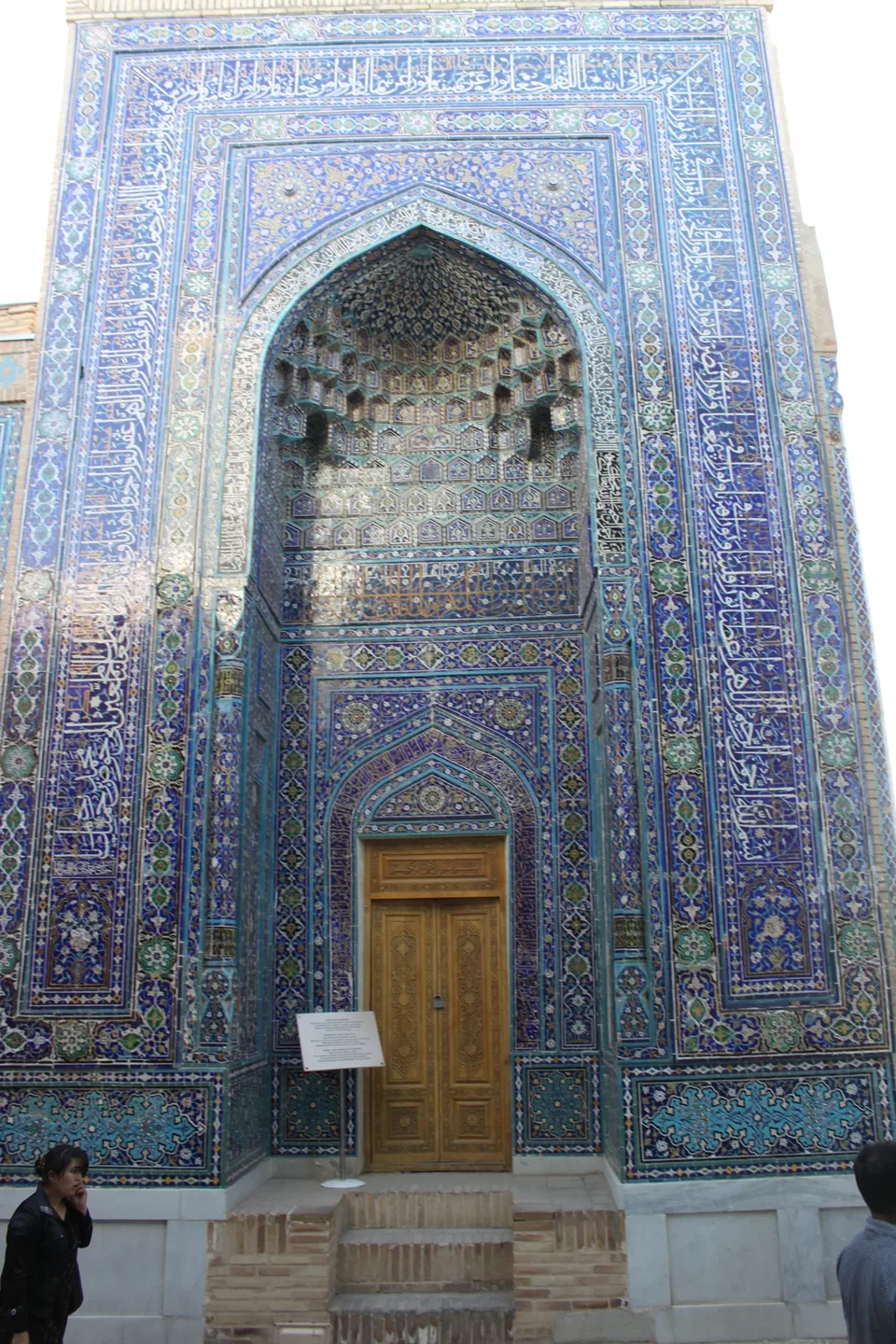

Why Registan matters
UNESCO includes Registan among the major monuments of Samarkand and describes the city as a crossroads of world cultures. Its record identifies mosques and madrasas as part of the historic urban fabric, and says ensembles such as Registan Square influenced Islamic architecture across a wide region. Read UNESCO’s World Heritage record.
That importance makes Registan more than a photo stop. The square helps explain how rulers, builders, teachers and students expressed authority and learning through architecture.
Read a madrasa as a place of learning
A madrasa is a place of study. At Registan, the monumental façades, courtyards and former teaching spaces point to the public value given to education. Look at how the buildings shape the square as a whole: each façade speaks to the others, while the open space makes the ensemble legible from a distance.
A responsible guide should avoid turning every decorative detail into a fixed symbol or inventing a lesson that was supposedly taught in a particular room. Ask what is documented, what is architectural interpretation and what remains uncertain.
Do not present every Islamic monument as a shrine
Registan’s madrasas are not the same type of place as Shah-i-Zinda’s mausoleums or the memorial complex of Imam al-Bukhari. Those sites involve burial, remembrance and devotional tradition. Registan’s story is centred on learning, civic space and architectural patronage.
This distinction does not reduce its religious or cultural importance. It makes the itinerary clearer. Travellers can understand why prayer spaces, schools, tombs and public squares call for different questions and different behaviour.
Give each Samarkand chapter its own time
One balanced day can begin with Registan’s urban and educational story, then continue to another monument only after a pause. Shah-i-Zinda needs a quieter approach because people may be praying or visiting a place of remembrance. The Imam al-Bukhari complex is outside central Samarkand and should not be squeezed into the city as though it were a nearby city-centre stop.
If your group wants both heritage and ziyarat, consider two days. That allows fewer rushed transfers, more rest and better separation between architectural explanation and devotional reflection.
Confirm the visit before fixing the schedule
World Heritage recognition does not guarantee a particular entrance, interior, event, photography rule or opening time on your date. Ask for the exact Registan access, guiding time, admissions, vehicle arrangements and any evening programme in writing. An illuminated square or public event should never be promised without current confirmation.
Tell us your dates, group size, walking pace and whether scholarship, architecture or devotional visits matter most. Named hotels, guide language, access and every optional service remain subject to an individual written proposal.