
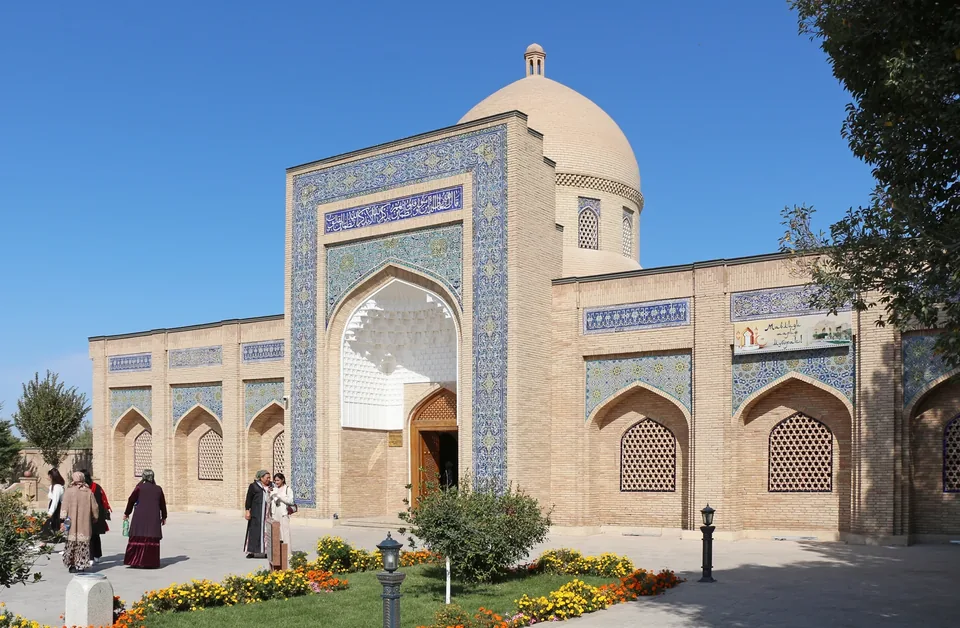

Begin with the line of teachers
Uzbekistan’s national tourism portal presents the Seven Saints route through figures associated with the Khajagan and Naqshbandi traditions: Abd al-Khaliq Gijduvani, Arif Rivgari, Mahmud Anjir Fagnavi, Ali Ramitani, Muhammad Baba Sammasi, Sayyid Amir Kulal and Bahauddin Naqshband. Its account links teachers with pupils and places each memorial within a continuing devotional geography. Read the official route overview.
Approach the sequence as a story of learning and transmission, not simply seven photographs. Names are transliterated in different ways, so ask your guide to identify each figure, the relationship to the next teacher and the evidence behind the account being shared.
Expect a regional journey
This is not one compact walk through central Bukhara. The official overview places memorials in and around Gijduvan, Shafirkan, Vabkent, Ramitan and other settlements of the region, while the Bahauddin Naqshband complex is described as about 12 kilometres from Bukhara. The exact road order, driving time and access arrangements should be confirmed for your date.
Decide whether your priority is the full sequence or a smaller number of unhurried visits. For older travellers, children or anyone with limited mobility, a shorter day with clear rest stops may be more meaningful than completing every stop.
Listen carefully to history and tradition
The official tourism account mixes biographical statements with devotional stories, including reports of exceptional longevity, healing, foresight and other revered qualities. These stories are part of the tradition surrounding the saints; they should not be presented as independently verified historical facts.
A thoughtful guide can distinguish a dated person or place from a later legend, then explain why the story remains meaningful to visitors. This distinction does not diminish devotion. It helps each listener understand what is documented, what is transmitted through tradition and what is a personal matter of belief.
Keep the wider city in view
UNESCO describes Bukhara as a more than 2,000-year-old Silk Roads city and an important centre of Islamic culture, theology and Sufism. Its World Heritage value rests on the wider urban fabric as well as individual monuments. Read UNESCO’s description of historic Bukhara.
That context is a useful second chapter to the regional ziyarat route. A separate city walk can connect sacred memory with mosques, madrasas, streets and the long history of scholarship. This is a suggested way to structure a visit, not a confirmed tour programme.
Confirm the practical details
Before travelling, ask for the proposed stop order, total driving time and planned breaks in writing. Confirm current access at each memorial, prayer-time considerations, appropriate clothing, photography rules, toilet availability and walking surfaces. Ask which language the guide can actually provide and whether the vehicle is suitable for your group.
No source reviewed for this guide confirms current opening hours, fees or guaranteed access for a particular date. These details must be checked locally close to travel. Ask about a Bukhara ziyarat itinerary