
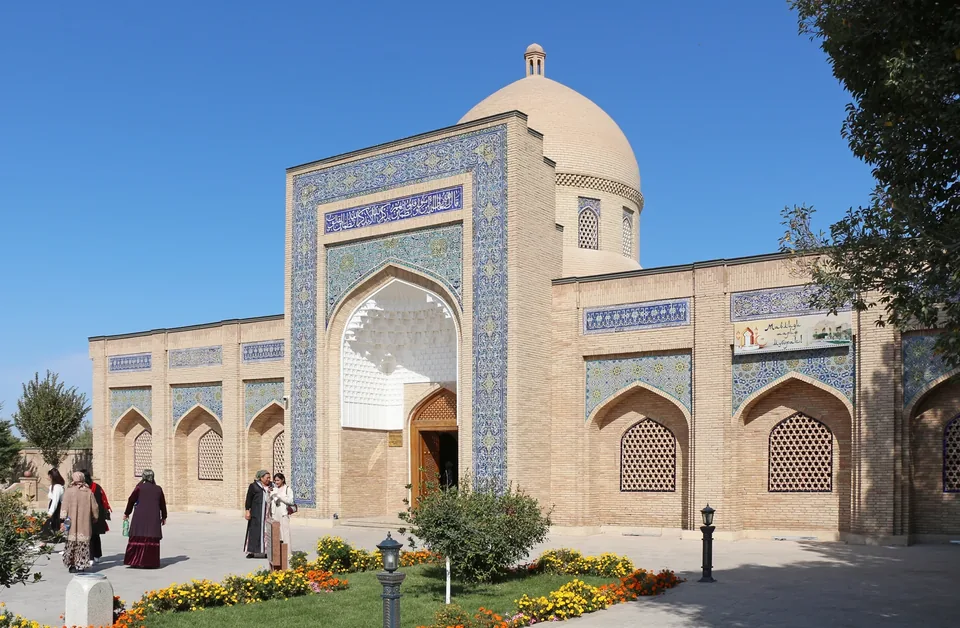

A visit with a different focus
A Bukhara itinerary can quickly fill with architectural landmarks. A visit to the Bahauddin Naqshband memorial complex offers a reason to step back from the checklist and ask what kind of journey you want to make.
The complex honours Bahauddin Naqshband, a Sufi teacher associated with the Naqshbandi tradition. Uzbekistan's national tourism portal places his memorial outside Bukhara and includes it in its account of the region's seven revered Sufi figures. The name appears in several English spellings, including Bakhautdin Nakshbandi. Read the national tourism portal's introduction.
The teacher behind the journey
The national tourism portal describes Sayyid Amir Kulal as one of Naqshband’s teachers. That connection is useful when planning the wider seven-site journey: the memorials relate to a network of teachers and disciples, rather than seven unrelated stops. Read the account of these relationships.
Before choosing a full circuit, ask your guide to outline those connections in plain language. Which teachers will you learn about? How much explanation and reflection can your group comfortably absorb in one day? A shorter programme with good context may suit you better than a rapid sequence of stops.

Read the context before arriving
Give yourself a little preparation time. Ask your guide for a concise introduction to Naqshband's place in the region's religious history and how the memorial relates to other sites around Bukhara. A useful conversation begins with the person commemorated, then turns to the buildings.
If you hear stories of extraordinary events or spiritual powers, ask how they are understood locally. They may form part of a devotional tradition. Presenting a tradition as a tradition allows you to appreciate its meaning without confusing it with a documented historical event.
There is no need to perform an unfamiliar observance simply because another visitor does so. You can listen, learn and remain considerate of different approaches to religious practice.
Leave room for reflection
Plan the excursion as a meaningful part of the day. Agree on your transport arrangements in advance, including where you will meet your driver afterwards. Allow a pause before returning to the next activity.
- Ask which areas are open to visitors on the day.
- Choose modest clothing and follow on-site guidance about footwear and head coverings.
- Give people praying or visiting family graves their privacy.
- Take photographs only where permitted and keep walkways clear.
If your group includes older relatives, ask specifically about walking distances, seating and access. A well-paced visit should work for the people making it.
Return to Bukhara with more context
Back in the city, the mosques, madrasas and neighbourhoods can become part of a connected story. UNESCO recognises Bukhara's historic centre for its preserved urban heritage and long importance to Islamic culture. Read about the World Heritage property.
Our suggestion is to pair the memorial visit with an unhurried afternoon in the historic centre, rather than trying to visit every regional shrine in one day. If the wider seven-site route is central to your journey, allocate extra time and plan it with a knowledgeable local guide.
Would you rather return with a long list of places, or with a clearer understanding of a few? Let the answer shape the day's schedule.
See where Bukhara fits in our suggested seven-day journey.